Global Seeds Development Launches Trialing Handbook Application
Ensuring high-quality data and reliability starts with data standardization. The Data Standards team recently launched an application that allows easy access to the Seeds R&D trialing handbooks for vegetables and field crops.
This new app, the Global Seeds Development Trialing Handbook, provides instantaneous updates and benefits anyone who is collecting and analyzing trialing data.

Key features of the new app include the following:
- It’s a one-stop shop for users of the vegetable and field crops (and eventually flowers) handbooks.
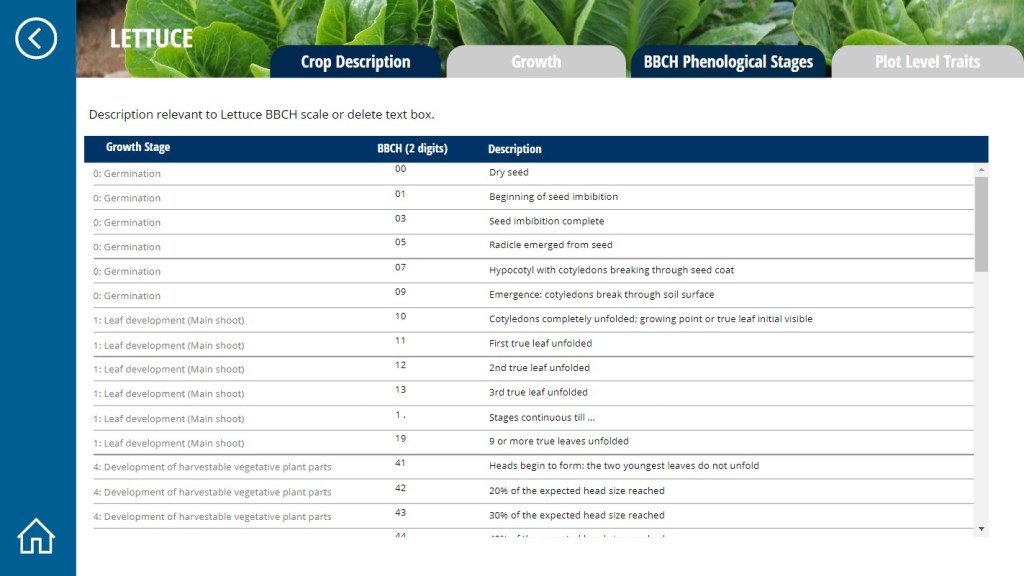
- It provides consolidated information on crop names, trial-level attributes, growth stages, and plot-level traits with clear trait definitions, and when and how to collect.
- The app ensures that users have the most recent version of the handbooks.
- It allows filtering by trait type, region, and keyword search.
- The easy-to-use interface is accessible through your computer, cell phone, or tablet through a link to the Power Apps application.
- The app will eventually be integrated with EZ Capture.
- The built-in email and chat functionality allows users to easily contact crop subject matter experts (SMEs) or the Data Governance team.
Development Process
In the first wave of the project, the team rolled out trialing handbooks for 13 vegetable crops and seven field crops. In the second wave, they completed seven additional vegetable handbooks. By using agile methodology to break down the work into manageable tasks, the Data Governance team was able to reduce the anticipated completion time by several months. They held regular meetings with the individual crop leads to standardize the traits by trait type, region, when to collect, and how to collect. Once they collected the data, they had meetings to rationalize and harmonize the traits across regions and then focused on gathering images that describe the traits.
The handbook has also improved the internal workflow of the Data Governance team. Prior to the new handbook standardization process, the handbook publishing process took six months with a team of three or four people. With the new process, the turnaround time was two weeks, allowing for timely releases of any updates of the handbook. The PDF versions of the handbook will eventually be phased out.
The handbook app has already received praise from end users.
Breeding trial specialist Rebecca Wente said that the app improved communication of traits when training new employees and sharing trait information outside of the trait group. “In a matter of weeks, I saw the payoff in hours of time savings for training new Breeding team associates,” she said. “Improved data quality resulting from standardizing the way traits are collected globally allows for better multilocation and multiyear analysis and enhanced development of traits by stimulating discussions within crop group and identifying new traits to be collected.”
“Standardization of the handbook allows us to harmonize data collection at global level, which is the first step to ensure data quality,” breeding trial specialist Sole Gonzalez Gutierrez said. “For our daily work, data quality is crucial to ensure proper data consolidation, analysis, and visualization to allow us to share results in consistent way. This useful and dynamic tool is available to everyone and is friendly to use. The next step is to motivate people to use it and provide feedback. Data standardization is the basis to create a culture of data-driven decisions.”
For any handbook updates or questions about the app, contact the Data Governance Team.
 Diana Robinson